

Paper Clutter: Getting rid of notebooks and journals
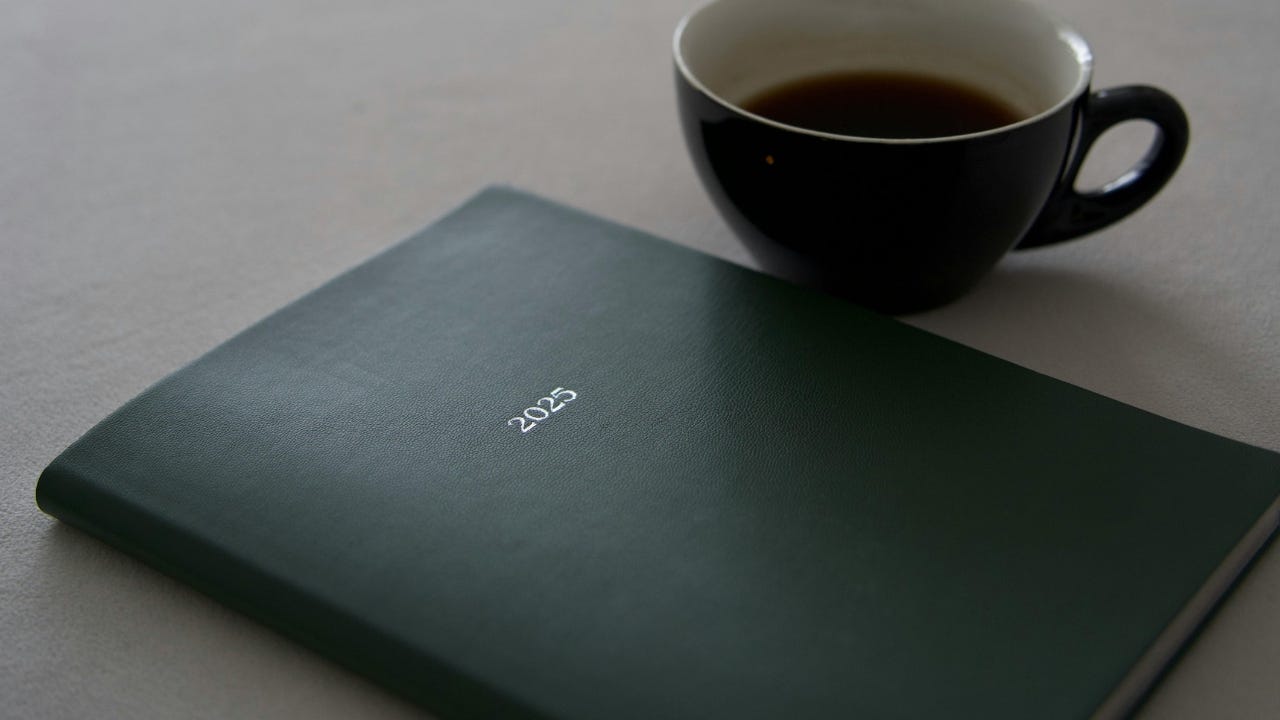
When it comes to decluttering, notebooks and journals are a complex category. They are part sentimental and part practical.
Sentimental because you put effort into them, they are unique to you and contain your memories and labor.
Practical because they often contain things you feel like you may want to reference in the future, very much a “what if I need this later?” kind of situation. But because they are unique, it’s not like you can go out and “buy another one” once you’ve thrown them away.
On top of being difficult to declutter from a decision perspective, they are difficult to declutter practically too. It’s not like you can donate them and recycling feels risky because of the potentially sensitive contents.
I’ve written before about getting rid of sentimental items in general, but sometimes it helps to get specific. Notebooks and journals come with their own questions, and they deserve their own approach.
I’ve personally gotten comfortable with letting go of notebooks. They’ve always felt more like tools, and over time I’ve developed a system that works for me. I’ve only been journalling for three years now, so I still have all the journals I’ve filled so far. As I start my fourth year of journalling though, the space I have allocated to storing my old journals is now full (I’ve stacked them in a corner of a shallow drawer) and starting next year I will be getting rid of one journal a year.
In this post, I’ll share my process for getting rid of notebooks and my plan for getting rid of my journals.
Notebooks
Notebooks, to me, are tools. I use them to think, plan, learn, sketch, and work things out. By viewing them this way, once they’ve done their job, I don’t feel much attachment to them. This is the process I use for getting rid of notebooks:
Keep or toss - First I decide whether this notebook is ready to be decluttered. A full notebook usually means it’s ready to be decluttered, but if the notebook is part of an ongoing project (like a class) I might hold onto it until the project itself has been completed. I usually have one notebook I carry around for multiple purposes, like meeting notes or working through ideas by sketching diagrams. These are easy to declutter once they are full. In the past I have ambitiously dedicated notebooks to new personal projects and ended up only filling the first couple of pages and then abandoning them. It would be a waste to get rid of a practically empty notebook, so in this case it’s probably better to keep the notebook and declutter the pages themselves.
Review, record, and redact - Once I’ve decided to get rid of a notebook (or a bunch of pages) I go through it page by page and copy of anything useful into a new notebook. My personal process for note taking is that I review them within a day of making the note (otherwise I can’t make sense of them anyways), so there isn’t much to copy, but it’s a good practice anyways. Sometimes I’ll find diagrams that work well in my portfolio for example, I take pictures of those and save them with the work on my computer. I also redact (cross out) any personal information (e.g. phone numbers, names, email addresses) and anything confidential like notes from meetings with clients that contain IP.
Recycle - Once I’ve gone through the notebook I rip each page out individually (I actually do this after every reviewed page). Then I know it can be recycled in the paper recycling bin. If there are particularly sensitive pages, I’ll shred them. I try to get notebooks that have paper covers so I can recycle the whole thing.
Journals
My journal is a place to reflect, process, and record life. Depending on how I’m feeling, I’ll write how my day went, what I’m worried about, what I’m grateful for, or simply what I’m planning on doing the next day. Even though I don’t have a strict format for my journal, I’m surprised by how this intuitive and personal style of writing has helped my quality of life. I used to have trouble sleeping because I’d have thoughts going through my head on repeat. Now that I’ve started journaling before bed, I can’t believe how fast I fall asleep. Going through my journals and seeing the things that were important to me two years ago and how I’ve grown personally is quite special, and because I’m new to journalling, this is a new challenge when it comes to decluttering. Like I said before though, as I write this, I’m going into my fourth year of journaling and will be getting rid of my first journal at the end of this year. This is what I’m planning on doing, but if anyone has any suggestions on how to better approach this I would love to hear them:
Keep or toss - Just like with other sentimental items, I’ll take it easy. I don’t have to get rid of my journals, so if it becomes too distressing I’ll give myself the space to change my strategy. In any case, I will only be getting rid of the oldest journal first, and then only one journal a year. This is similar to my approach to getting rid of photos. The longer ago something is, the easier it is to put in perspective (a photo you took of a meal or sunset three years ago has a different feeling than one you took last week).
The Summary Journal - I enjoy witnessing my personal growth and big milestones, and this is where the rub is when it comes to getting rid of my journals. I kind of want to keep the information so I can look back on my years and see how far I’ve come. I don’t really want to sit and read through 365 days of journal entries (times how many years I have been doing this) to see how I have changed over time though. My solution to this is “The Summary Journal.” I’m planning on getting a separate journal in which every one or two spreads will be a place to summarize the journal I am getting rid of that year. It’ll be a combination of major milestones (or lack of), holidays, travel, learnings, the things that kept me up at night, sad things that happened, aspirations, goals, and all that kind of stuff.
Ritual - Once I’ve summarized the journal it’s time to get rid of it. Now I’m not 100% sure on how I’m going to approach this, but one this I do know is that I will want to destroy it. I don’t want pages lying around (even in a recycling center) for people to find and read. I’m thinking of either shredding the pages or burning them (obviously only where it’s safe to do so). Burning may seem a bit dramatic, but I’m quite spiritual and I’ve always seen fire as a beautiful way of releasing and cleansing. In any case, destroying the journals will help me release the details of my past so I may live more in the present.
Final thoughts
And there you have it, paper clutter comes in all forms. A lot of what used to be paper is digital these days (think bills, transactions, warranties), so that significantly reduces the amount of paper we have around. Physical notebooks and journals represent effort, growth, thinking, and memory, which is why they can feel so hard to let go of.
For me, the key shift has been separating use from storage. Notebooks serve me best while I am actively using them, not years later in a drawer. Journals serve me by helping me process life in the moment, not by requiring me to archive every detail forever. Once they have done that work, it is okay for their role to change, or to end.
Decluttering notebooks and journals does not have to mean erasing your past. You can extract what matters, honor what was important, and still make space for what comes next.
There is no “correct” amount of paper to keep. If you are struggling with this category, take it slowly. Start with one notebook, one journal, or even just a few pages. Pay attention to what feels relieving versus what feels forced. The goal is not minimalism for its own sake. The goal is always to keep around what supports the life that makes you happiest and most at peace.
I have been watching your YouTube Vlog since you were light Coco and then have seen the transition to Refine. I just want to tell you that I appreciate everything that you do here. I can tell that you, like me, are an HSP. I have such a deep resonance with what you share.... always. Sometimes I can already tell what you are going to say in a post, but I HAVE to read it because your organization and deep thought and processing often (who am I kidding ALWAYS) helps me to organize my own thoughts and put concepts that are swirling in my head into digestible pieces. What an absolute treasure I have found in you!!! I know as an HSP we are often self critical and have plenty of doubts. You need not feel this way. I have been here all along. I see you and I value what you're doing. You are a bright and intuitive person. I am so very grateful to have found you. Kind Regards, Kara
I like the idea of the summary journal. That's really using the journal to learn from while also, like you say, recognising that its value is as a processing tool rather than an artifact.
I refer to old journals a lot when writing books, but once this next book is done I might start this process because my stack of 20+ old notebooks is definitely taking up significant real estate.